

by Fredy Künzler
Reading time: 4 minutes
WYSIWYG.
A term from the early days of computing. ‘What You See Is What You Get’, or WYSIWYG for short, referred in the 1980s to desktop publishing programs such as PageMaker, which could display a designed page on the screen as closely as possible to how it would later appear when printed.
This was by no means a given back then. Laser printers were expensive and therefore not very widespread. Most offices had noisy ‘dot matrix printers’, as they were affectionately and mockingly known. These so-called dot matrix printers made an unmistakable scratching noise when in operation.
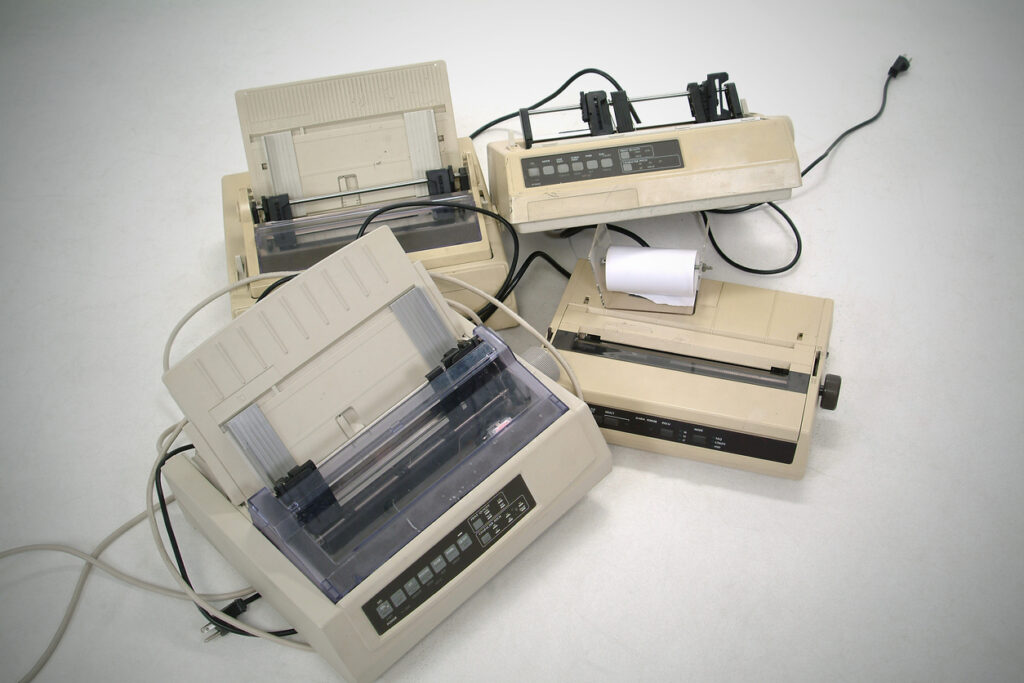
Image: Dot matrix printer, Source: iStock
As a term, WYSIWYG may have largely disappeared today. The question behind it, however, is more relevant than ever: does the content actually match what the packaging promises? In the age of AI-generated images, lies are being told left, right, and centre. ‘True and fair’ has taken on a whole new meaning today.
It’s exactly the same with internet connections. There, you usually see ‘10 gigabits per second’ in large, unmissable letters. Only in the small print do you find the words ‘up to’ or ‘best effort’. The glossy brochure thus subtly suggests that things might be different. The advertised speed is not a guaranteed performance promise but a theoretical maximum under ideal conditions.
The advertised bandwidth of a broadband connection is one thing, but the actual customer experience is sometimes quite another. A speed test can provide some indication, but it is not a reliable indicator of the performance that is consistently available. Modern provider networks allow certain data streams to be prioritized. For example, speed test data may be given priority, whilst other applications receive less bandwidth. A single measurement, therefore, sometimes tells us less than many customers would like to believe.
It is attractive for internet service providers to sell high-speed 10-gigabit connections. This is because customers primarily compare the advertised speed and the price. However, a closer look reveals that the reality is more complex. Most 10-gigabit connections offered today are based on XGS-PON technology. Here, the available resources are distributed across up to 32 subscribers via optical splitters.
But there’s more to it. The Huawei EA5800-X7 OLT (Optical Line Termination) is frequently used to aggregate the XGS-PON connections. When fully equipped, this device has 7 line cards, each with 16 XGS-PON ports. Do the math: 7 x 16 x 32 = 3584. That is the number of customers that can be connected to this device. The maximum uplink capacity—that is, the internet bandwidth available to these 3,584 customers at best—is 40 gigabits. In reality, 80% of this is usable. 32 gigabits divided by 3,584 customers = 8.9 megabits (!).
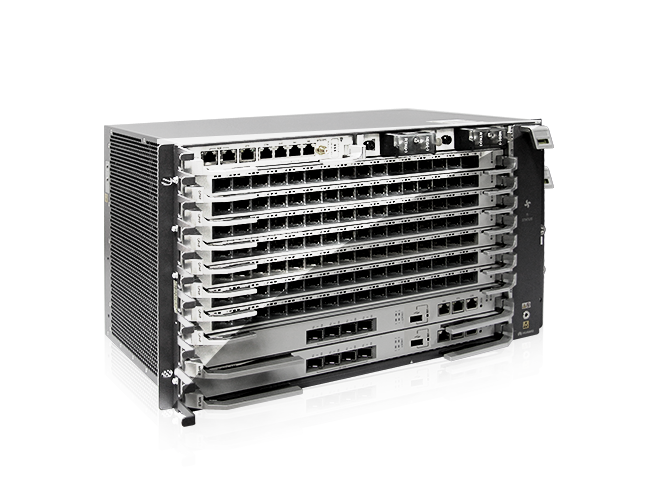
Image: EA5800-X7, Source: HUAWEI
WYSIWYG for broadband connections? If only.
Advertisements for a 10-gigabit connection therefore merely describe performance under ideal conditions. However, they say very little about the bandwidth actually available to the customer on a Sunday evening during prime time or during a major streaming event.
This principle is known as ‘overbooking,’ euphemistically described as ‘up to.’ And many unsuspecting customers believe they have ‘so to speak always’ bought 10 gigabits. That is precisely why choosing a broadband connection is not just a question of nominal bandwidth and price, but also one of transparency and product disclosure. WYSIWYG, in other words. Or, as we often say: «Everyone chooses their provider freely.»